
Images in this article are illustrative and do not depict the animals in these stories.
There was a problem with the bananas.
Not the bananas themselves. They had travelled perfectly well from tropical Queensland towards Sydney. The problem was that, somewhere along the way, some of them had picked up passengers.
Frogs.
By the time the fruit reached its destination, small green tree frogs were turning up among the bunches. They had not been packed there. Nobody had ordered them. They had simply climbed into the bananas and, in some cases, travelled hundreds of kilometres with the fruit.
For the people who found them, it was an odd surprise. For wildlife workers, it was a familiar one.
It tells us something important about the modern world.
Animals are travelling because we are travelling.
What connects us: ShipsTrucksAircraftPortsWarehousesFarmsSupermarkets
A wild animal does not need to understand any of this. It only needs to climb into the wrong place at the wrong time.
And sometimes, its unexpected journey becomes a remarkable story.
The baboons who arrived in Durban
In September 2025, people around Umbilo in Durban began seeing a young baboon where a young baboon really should not have been.
He was running around industrial and residential areas, disappearing whenever rescuers got close and turning the search into something of a chase.
Then another baboon was spotted.
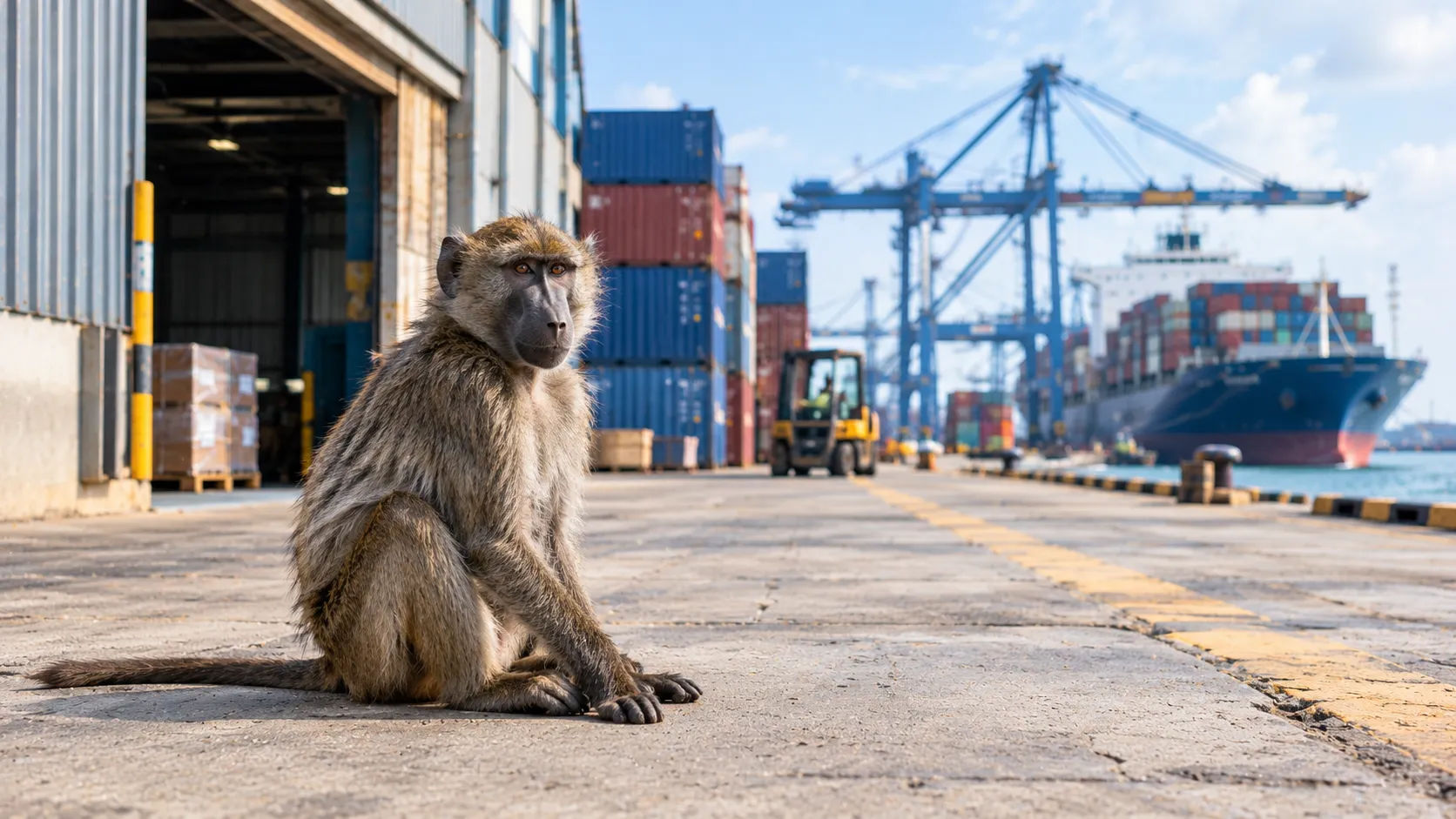
Wildlife rescuers suspected the pair had arrived in Durban aboard a ship. The first reports suggested the ship had come from the Cape Town area, although exactly where the baboons originated was not immediately known. There was even a possibility that the younger animal had followed its mother aboard.
Baboons are social animals. They live in troops, and releasing an unfamiliar baboon into the wrong troop could have serious consequences. Rescuers therefore did not simply want to catch the animals and put them somewhere that looked suitable.
They eventually caught both.
Both were then placed under veterinary care, with DNA samples taken to help determine where they had come from.
There is something almost comical about imagining a baboon stepping off a ship in Durban and deciding that the city looked like a good place to explore.
But the story shows why accidental animal movements are taken seriously.
A wild animal arriving somewhere new is not simply a lost tourist.
Why it matters: it may carry parasites or disease, it may struggle to find suitable food and shelter, and if it belongs to a species already present, its arrival can create problems for existing populations.
A cat's 3,500-kilometre mistake
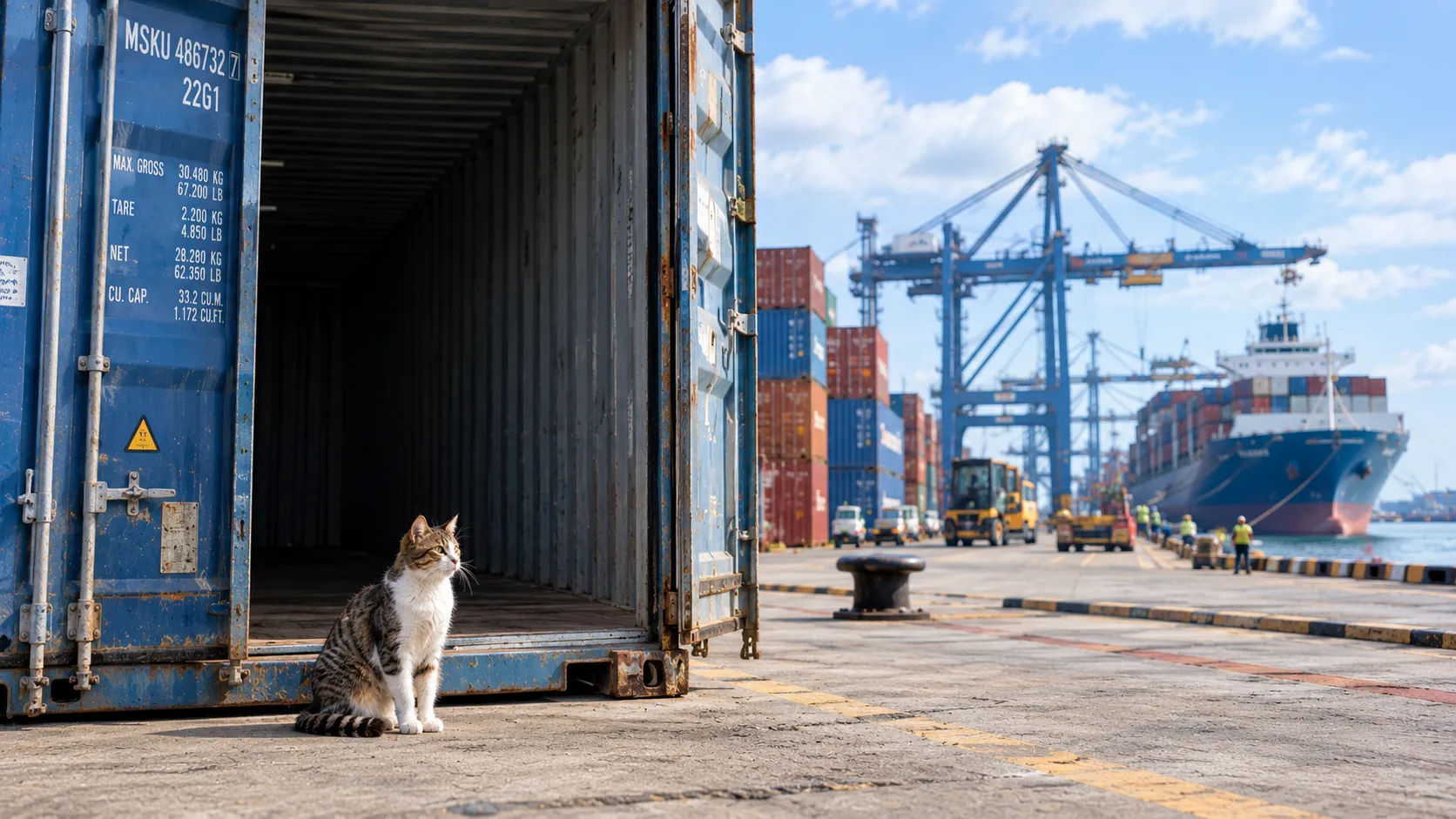
Cats are particularly good at finding small, quiet places to hide.
That is probably how Pippa ended up inside a shipping container.
In Australia, the cat disappeared from Darwin. Nobody knew where she had gone. Then, 49 days later, she was found in Brisbane — about 3,500 kilometres away.
Pippa had apparently climbed into a container filled with household belongings and remained inside as it travelled across the country.
When the container was opened, she was alive but badly dehydrated and had lost a considerable amount of weight. Her story eventually ended happily: she was reunited with her family.
A moving truck, garage, storage container or delivery vehicle can all look like a perfectly good hiding place.
The problem comes when the doors close.
Then there was Connie
Connie's journey was even less likely to be planned.
In 2024, workers at the Port of Houston in Texas heard barking coming from a shipping container.
The container was high above the ground.
Inside were old vehicles.
And inside those vehicles was a dog.
The dog, later named Connie, had apparently got into the container before it was shipped. She had been trapped for at least eight days by the time she was discovered. She was thin and dehydrated, but alive.
The discovery set off a rescue operation involving port officials, animal welfare workers and veterinarians. Connie was eventually transferred to an animal rescue organisation, where she could receive treatment and recover.
Her story is a good example of how complicated the movement of goods can be.
A container's journey: Vehicle YardTruckPortVesselOceanPortTruckCustomer
Nobody involved in that process expects to find a dog inside.
Yet there she was.
A frog goes shopping in Wales
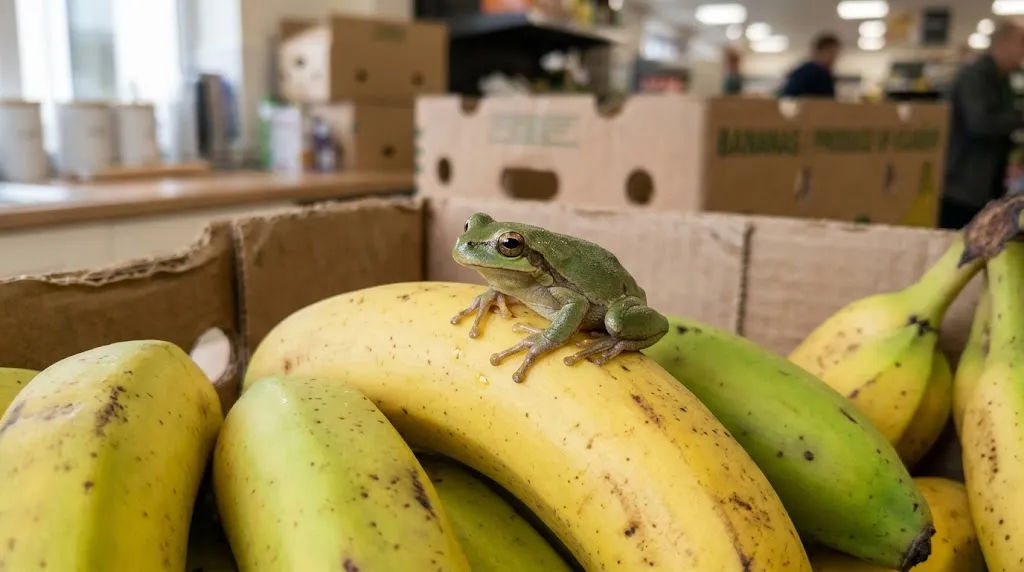
If you think a shipping container is an unusual way for an animal to travel, consider the banana frog.
In 2020, a family in Llanelli, Wales, bought bananas from a supermarket and discovered a tiny frog among them.
From Colombia. Roughly 8,000 kilometres.
The frog was rescued and taken into specialist care. It was believed to be a South American tree frog, although identification of small frogs is not always straightforward.
This sort of thing happens often enough in the fruit trade to have attracted the attention of wildlife specialists.
There is a sad reason for that vigilance.
Bananas are often harvested while still green and later ripened commercially. Frogs hiding among the fruit can be exposed to conditions they never encountered in their natural habitat, and they can be injured during handling. There are also concerns about moving diseases between frog populations — a biosecurity problem.
Biosecurity — measures taken to prevent potentially harmful animals, diseases and other organisms from entering or spreading in a new place.
That is why authorities do not simply say, "Well, it survived the trip. Let it go."
A fox crosses the Atlantic
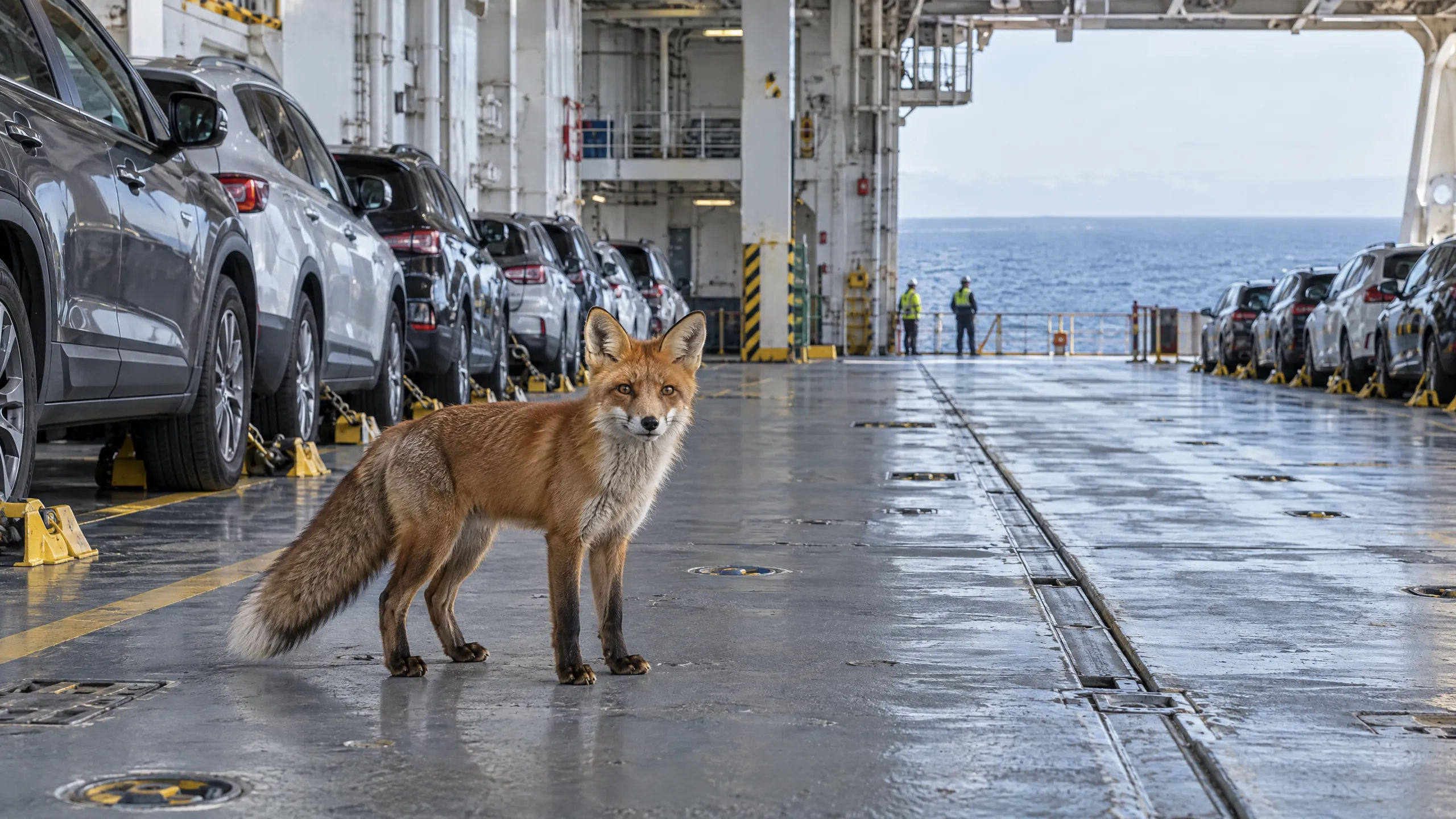
Then came Basil.
Or, at least, that is what he is now called.
In February 2026, a young male red fox somehow got aboard a vehicle carrier in Southampton, England. The ship crossed the Atlantic and arrived at the Port of New York and New Jersey 14 days later.
Nobody knows exactly how the fox got aboard.
That is perhaps the most entertaining part of the story.
14 days · 5,500 km · 5 kg · one very determined fox
The fox was discovered by the ship's crew and taken into the care of the Bronx Zoo.
He weighed about 5 kilograms and appeared to be in reasonably good health. He was kept at the zoo's veterinary centre while further health checks were carried out, and staff began considering a suitable long-term home for him.
Even though red foxes are found in North America, this particular animal had arrived from another country under completely unknown circumstances.
Quarantine — keeping an animal separate for a period while its health is assessed.
A successful stowaway story does not necessarily end with an animal being sent back into the wild.
Sometimes the responsible ending is a safe new home.
The Galah who went on holiday without her family

Harri was a little different.
She was not a wild animal.
She was a pet galah, an Australian cockatoo, living with her family in Brisbane.
When Harri disappeared, her owners assumed they had lost her.
They were wrong.
She had apparently followed them to the cruise terminal.
Four days into a cruise bound for New Zealand, ship staff discovered that they had acquired an unexpected passenger.
Harri.
4 days · 2,000 km · one stowaway cockatoo
It might have made a funny family story if the ship had simply turned around and taken her home.
But international borders make animal travel more complicated.
New Zealand has strict biosecurity controls because diseases and introduced species can threaten its native wildlife. Harri therefore had to be kept safely contained while authorities worked out what to do.
Fortunately, she was microchipped.
Microchip — a tiny identification device placed under an animal's skin, containing a unique number linked to the owner's details in a registration database.
In Harri's case, that little chip helped connect an unexpected bird on a cruise ship with the family waiting for her back in Brisbane.
The adventure ended with Harri going home.
Her owners probably looked at the cruise industry rather differently after that.
Microchipping is not just for travel. It is the fastest, most reliable way to prove an animal is yours if it slips out of the gate, the car, or a stranger's arms. Ask Isapet about microchipping your pet — it takes minutes and lasts a lifetime. Learn more about microchipping.
Some animals travel farther than we ever imagine
The strangest thing is how ordinary the beginning can be.
A shopping trip. A household move. A shipment of bananas. A vehicle carrier leaving a port. A cruise holiday. A container being loaded at a warehouse.
And they remind us that, when animals cross borders, care and preparation matter just as much as the journey itself.
Animals are simply responding to their surroundings. Modern trade then does the rest.
A piece of cargo can pass through several hands and several forms of transport before reaching its destination:
- A farm or factory
- A local truck
- A warehouse
- A port
- A cargo ship or aircraft
- Another port
- Another truck
- A distribution centre
- A shop or customer
That complicated chain is wonderful for moving goods around the world.
For an animal that accidentally climbs aboard, it can become a very long ride indeed.
What these stories mean for pet owners
There is a serious message hidden among all the funny ones.
If you are moving with a dog or cat, do not leave the journey to chance.
A pet travelling from Mombasa to Nairobi is one thing. A pet travelling from Kenya to another country is another matter altogether.
Different destinations can have different requirements for:
Pet relocation requirements checklist
- Vaccinations
- Veterinary examinations
- Identification and microchipping
- Health certificates
- Import permits
- Approved travel containers
- Quarantine
- Veterinary inspection on arrival
Tip: The exact requirements depend on where the animal is going and how it is travelling. Start with a free relocation assessment.
The exact requirements depend on where the animal is going and how it is travelling.
This is why pet relocation needs to be planned rather than treated as an ordinary luggage problem.
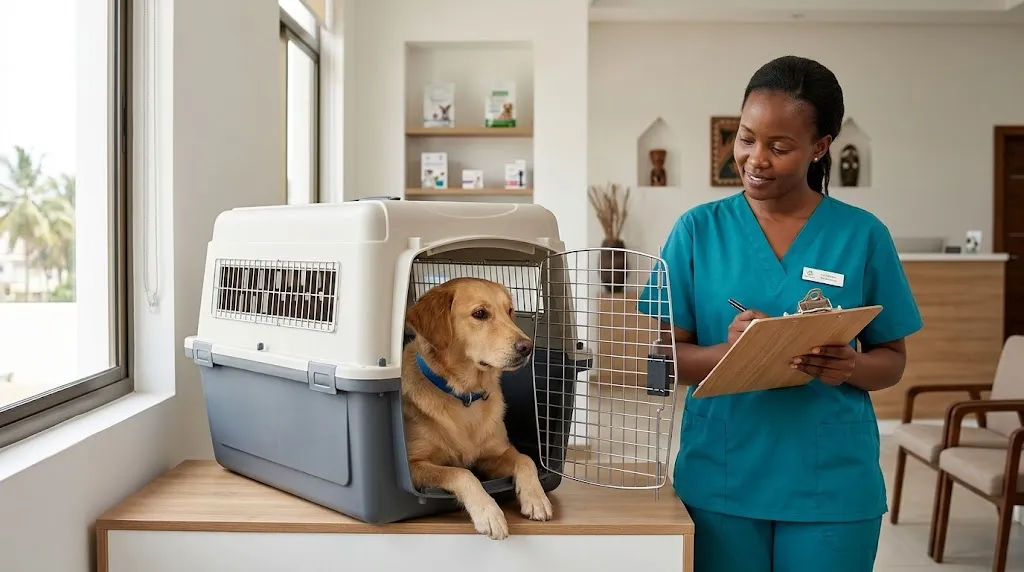
At Isapet Veterinary Clinic in Nyali, Mombasa, pet relocation is part of helping families prepare their animals for safe journeys within Kenya and across borders.
The aim is straightforward: know the requirements, prepare the animal, organise the paperwork and make the journey as predictable as possible.
After all, your dog should arrive at the destination because you planned the trip. Not because he discovered an unlocked truck.
Has your pet ever disappeared and turned up somewhere completely unexpected?
Or do you know of a strange animal stowaway story from Kenya, Africa or elsewhere? Share the story with Isapet. Tell us where the animal started, how it travelled, where it was found and — most importantly — how it all ended.
Because somewhere in the world, there is probably another animal quietly planning its next journey. It just has not told us where it is going yet.