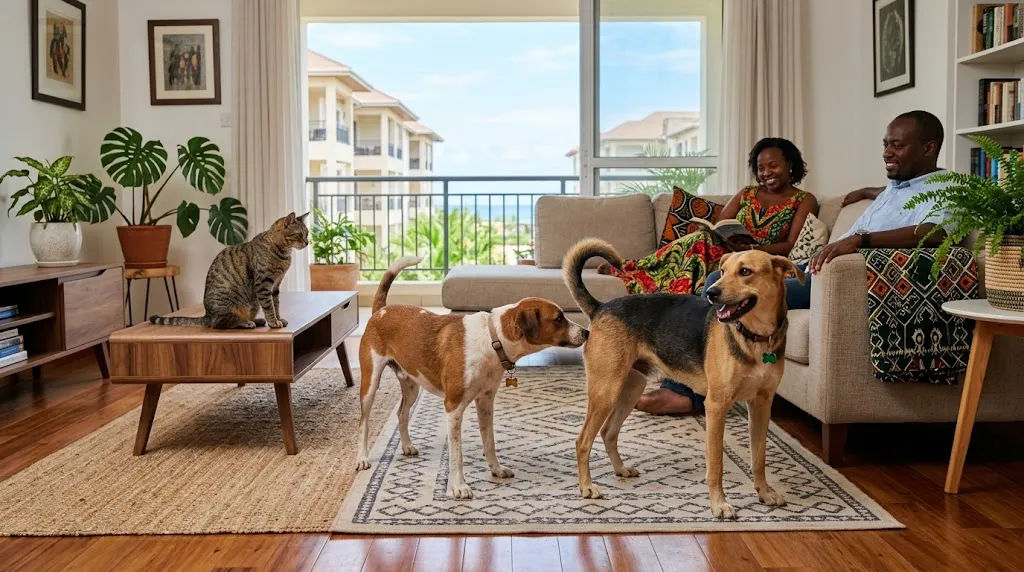
Dogs Sniff Each Other's Bottoms
It may be embarrassing to us. To dogs, it's perfectly ordinary information gathering.
A dog's sense of smell is extraordinarily powerful. When one dog sniffs another dog's butt, it can gather information about that individual through scents produced around the body — think of it as a dog's version of saying "Hello. Who are you?"
Dogs can use scent to gather information about another animal and their surroundings that we simply cannot detect. Their noses are a major way of understanding the world.

For dogs, a sniff can say much more than a simple hello. Cats Push Things Off Tables
You place your phone on the table. Your cat looks at it, paws it, and looks smugly at it as it falls. Deliberate? Sometimes — but probably not for the reason you think.
Cats are naturally curious and investigate objects with their paws. Their hunting instincts also make moving objects interesting. And if knocking something down consistently makes you rush over, your cat may learn that this is an excellent way of getting your attention.
Provide appropriate toys and play opportunities, keep fragile objects away from the edge of tables, and if the object is safe, try not to reward the behaviour with a dramatic reaction.
In simple terms: your cat may be investigating, playing, hunting — or discovering that gravity gets your attention.
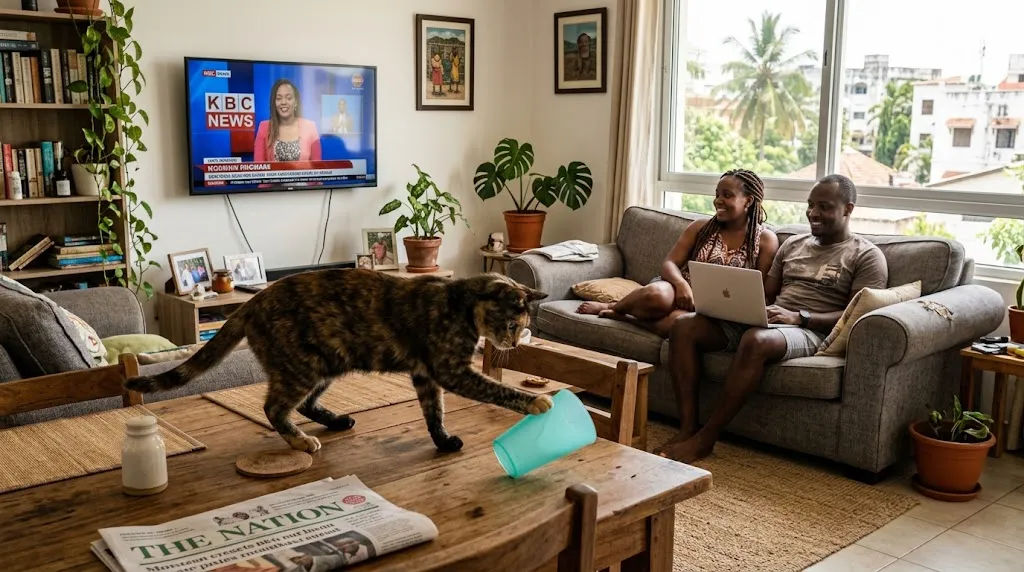
Your cat may be investigating, playing or simply discovering that knocking things down gets your attention. Cats Knead Blankets — and Sometimes You
Those rhythmic little paw movements are often called "making biscuits." Kneading begins in kittenhood — nursing kittens press their paws against their mother while feeding. Some cats continue the behaviour into adulthood.
An adult cat may knead because it feels comfortable and relaxed. Cats may also knead to prepare a resting place or leave scent from glands around their paws.
So when your cat settles on your lap and starts kneading, take it as a compliment. Unless the claws come out — then a blanket between you and those little paws may be wise.
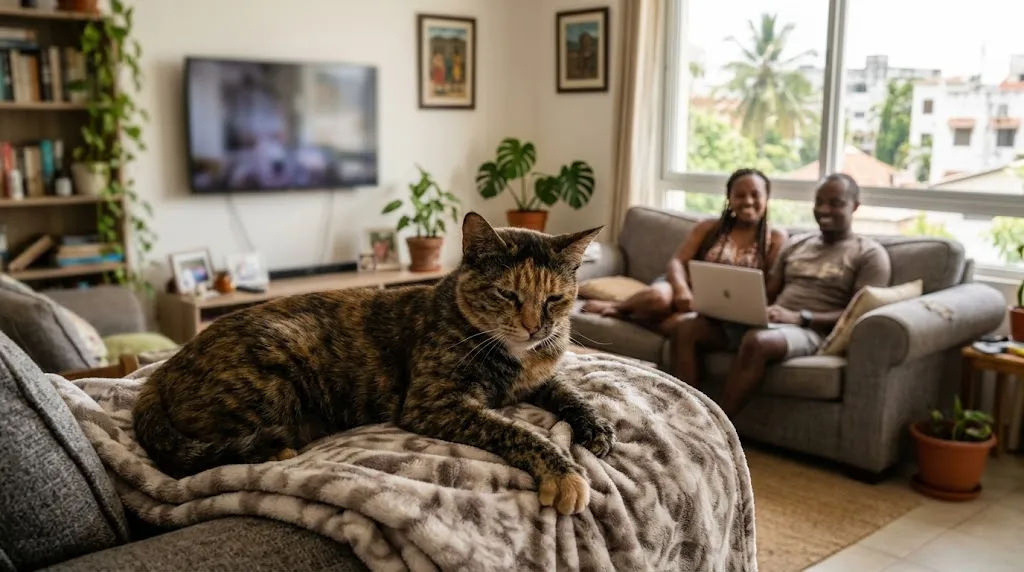
"Making biscuits" is a behaviour that often begins in kittenhood and can continue into adulthood. Dogs Spin Before They Lie Down
Some dogs perform a little dance before settling into bed — one turn, two turns, perhaps three, then down they go.
This behaviour may be a leftover from the days when dogs' ancestors had to create a comfortable place to sleep outdoors. Circling could help flatten grass and clear away uncomfortable objects before resting.
Your dog has a perfectly comfortable bed today. The ancient bedtime routine may simply have come along for the journey. In simple terms: your dog's ancestors prepared the bed — your dog may still feel the need to "arrange the furniture."
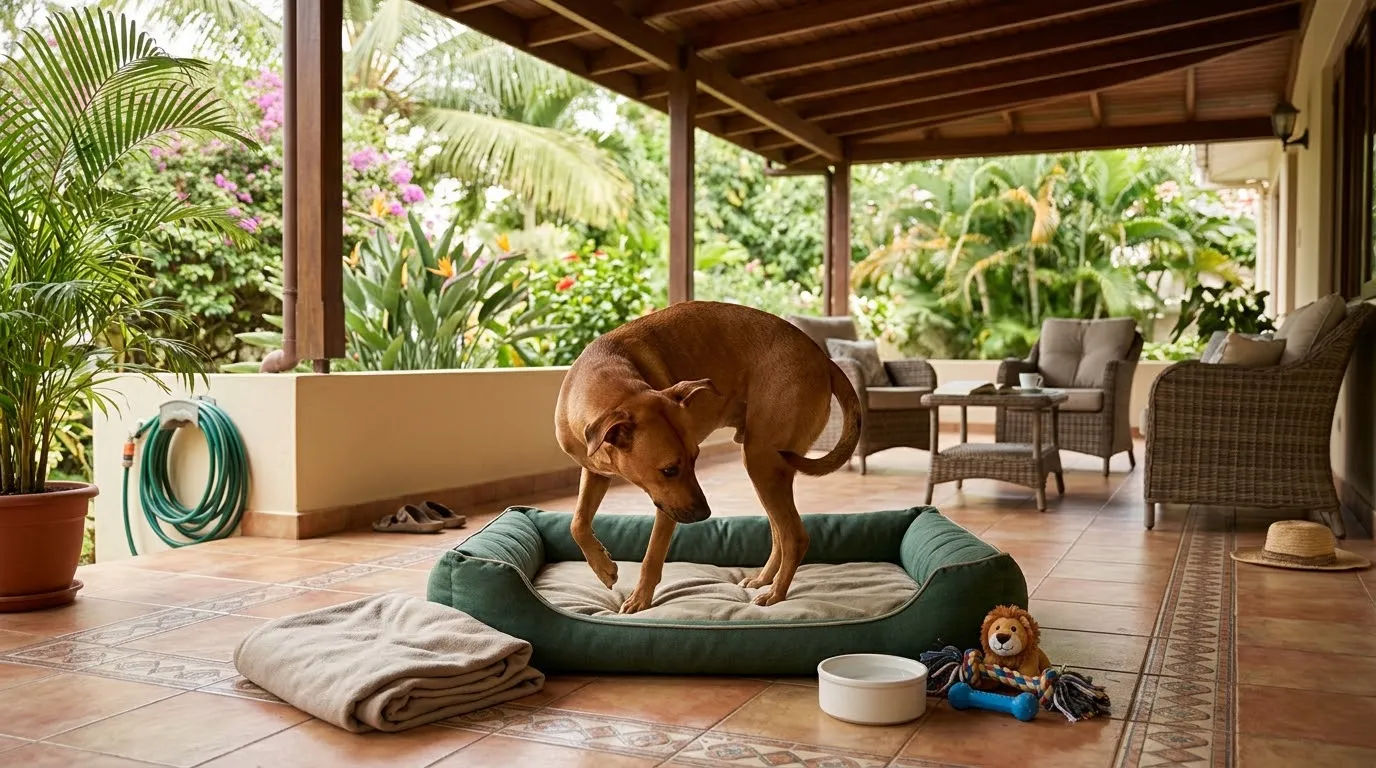
Your dog's bedtime ritual may be an old instinct inherited from its ancestors. Dogs Tilt Their Heads When You Talk
"Who wants to go for a walk?" Head tilt. "Would you like a treat?" Another head tilt. It's one of the most charming things dogs do.
Scientists don't have one definite explanation for every head tilt. The behaviour may help a dog gather information from sounds, and vision may also play a role. Dogs may also learn that head tilting gets a positive reaction from their humans — so yes, your reaction may actually encourage more of those adorable tilts.
One important exception: a persistent head tilt that isn't connected to something the dog is listening to should be checked by a veterinarian. It can sometimes be associated with problems affecting the ear or the body's balance system.
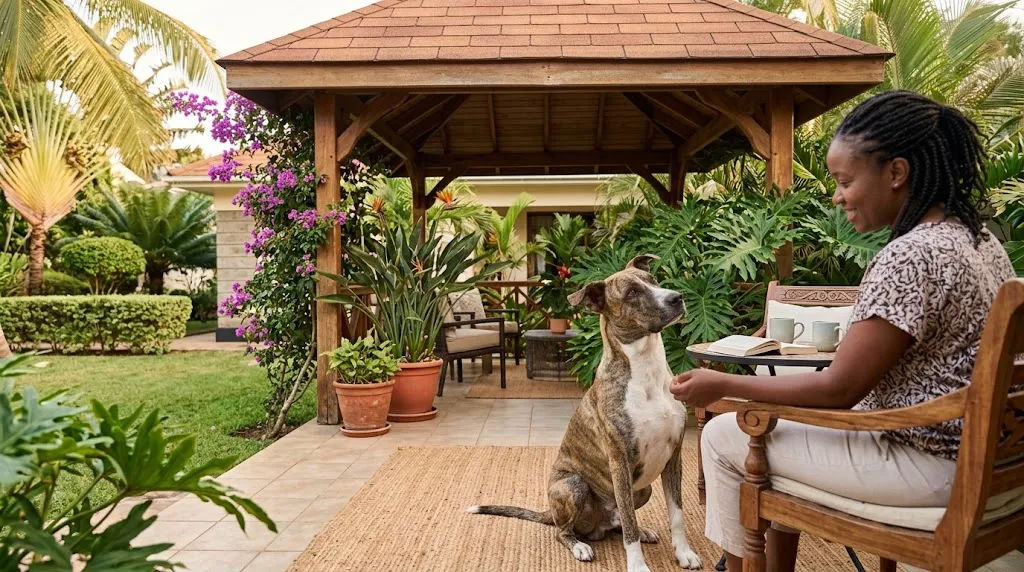
That adorable head tilt may be your dog trying to gather more information. Cats Scratch Furniture Even When They Have a Scratching Post
Why the sofa? Because the sofa is often an excellent scratching surface.
Scratching is normal cat behaviour. It helps cats maintain their claws, stretch their bodies and leave scent and visual marks in their environment. The answer isn't to punish the cat for being a cat.
Instead, provide attractive scratching alternatives and place them where your cat actually wants to scratch. A good scratching post in the wrong corner may be ignored — a suitable scratching surface beside the favourite sofa may suddenly become very popular.
Cats Suddenly Run Around the House
One minute your cat is sleeping. The next minute it's racing through the sitting room, turning sharply, climbing and disappearing around a corner. Welcome to the zoomies.
This behaviour is also called a Frenetic Random Activity Period, or FRAP. It's particularly common in younger cats and indoor cats — short bursts of energetic running can be completely normal.
Regular play can provide an appropriate outlet for that energy. If the behaviour becomes unusually frequent and is accompanied by other changes, it's worth discussing with your veterinarian.
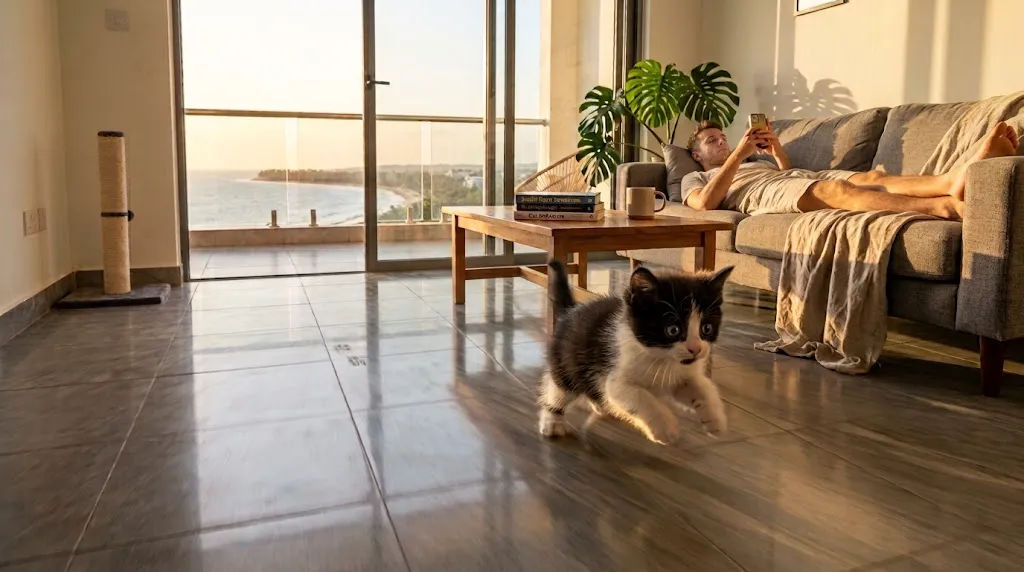
Sometimes the best explanation for a sudden burst of speed is simply: zoomies. Cats Carefully Bury Their Toilet
Cats can be surprisingly particular about their toilet habits. Many will scratch around the litter tray and carefully cover what they've left behind.
One explanation is rooted in their wild ancestry — covering waste may have helped cats reduce the scent that could reveal their presence to other animals. It's one reason keeping the litter area clean matters.
A cat that suddenly stops using its litter box, starts toileting elsewhere or appears uncomfortable while using it shouldn't simply be labelled "stubborn." Changes in toilet behaviour can sometimes have a medical cause and should be discussed with a veterinarian.
Dogs Sniff Everything on a Walk
To you, that tree may just be a tree. To your dog, it may be the morning newspaper.
Dogs gather enormous amounts of information through scent. A walk therefore isn't simply about covering a particular distance — sniffing allows your dog to investigate and process what's happening in the environment.
Within safe limits, allowing your dog some time to sniff can make walks more mentally interesting. So the next time your dog stops for what feels like the hundredth sniff, remember: your dog is reading the neighbourhood.
Dogs Roll Onto Their Backs
You may assume this always means "please rub my tummy." Sometimes it does. But not always.
Dogs can roll onto their backs during play, as a friendly or appeasing signal, or when they're frightened or uncomfortable. The rest of the body tells you much more than the position alone — a relaxed, loose body is very different from a tense dog with its ears pulled back and tail tucked.
So before reaching for the belly, look at the whole dog. Relaxed body? Your dog may be inviting interaction. Tense or frightened body? Give your dog some space.
Your Pet Is Not Trying to Be Strange
Dogs and cats live in our homes, eat our food, sleep on our furniture and sometimes occupy far more of the bed than their size should allow. But they're still animals. Many of their peculiar habits make sense when we look at the world through their senses and instincts rather than our own.
Your dog's sniffing is information gathering. Your cat's kneading may be comfort. Your dog's circling may be an old bedtime routine. Your cat's midnight sprint may simply be energy looking for somewhere to go. And sometimes, of course, a cat really is just determined to push your pen off the table.
Learning to understand these behaviours helps us respond appropriately rather than treating every unusual habit as a problem. The most important thing is to know what's normal for your own pet.
When a familiar behaviour suddenly changes, becomes excessive, or appears alongside signs such as pain, weakness, loss of appetite, difficulty walking, unusual aggression or changes in toilet habits, speak to your veterinarian.
Written by the Isapet Veterinary Clinic team. Isapet Veterinary Clinic, Nyali, Mombasa.