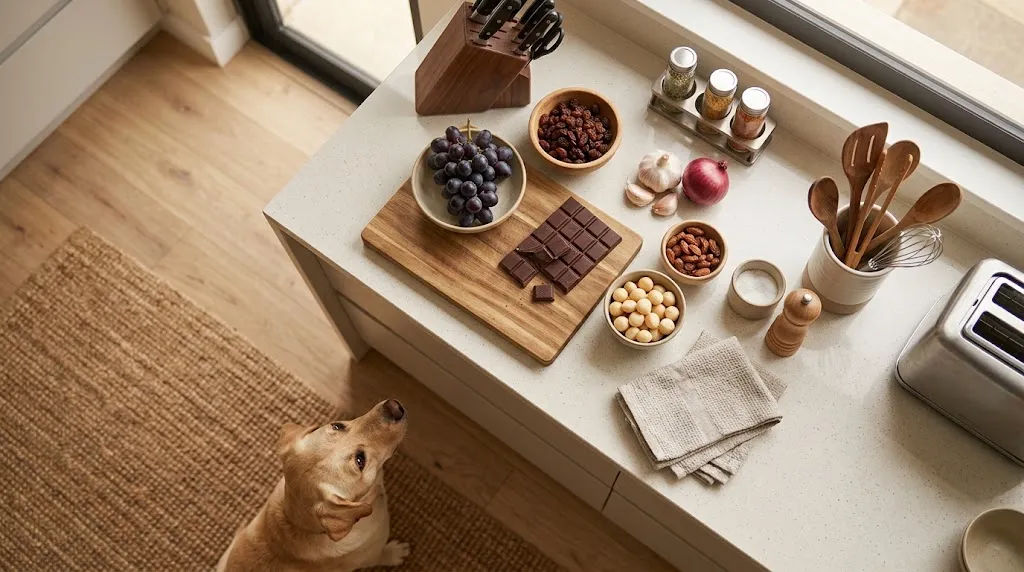
Chocolate
Chocolate is one of the best-known foods that dogs should never be given. The danger comes mainly from theobromine and caffeine — natural stimulant chemicals found in cocoa. Dogs process them much more slowly than we do, allowing them to build up in the body.
The darker and more concentrated the chocolate, the greater the concern. Cocoa powder and baking chocolate contain particularly high concentrations.
A dog that eats chocolate may develop:
- Vomiting or diarrhoea
- Restlessness
- Excessive thirst
- A rapid heartbeat
- Shaking or tremors
- Seizures in severe cases
Keep away: chocolate bars, cocoa powder, baking chocolate, chocolate cake and chocolate-containing snacks.
Grapes and Raisins
That small bunch of grapes on the table may look harmless. For a dog, it can be a serious problem.
Grapes and raisins have been associated with acute kidney injury. The exact amount that causes illness is unpredictable, because the concentration of the suspected toxic substance can vary between fruits — some dogs become seriously ill after relatively small quantities.
Raisins deserve particular attention because they're concentrated grapes. They can turn up in baked foods, cereals, cakes, snack mixes and bread.
Do not wait for symptoms before seeking veterinary advice after a known ingestion.
Onions
Onions are particularly easy to overlook because they're such a normal part of our cooking.
Dogs can be affected by onions whether raw, cooked, dried or powdered. The toxic compounds can damage red blood cells — the cells responsible for carrying oxygen around the body — and can lead to anaemia.
Be careful with: cooked food containing onion, onion powder, soup mixes, gravies and sauces, and leftovers heavily seasoned with onion.
Garlic
Garlic belongs to the same plant family as onions and presents a similar concern. In fact, garlic is more concentrated in the compounds associated with toxicity than onion. Dogs can be affected by fresh garlic as well as concentrated forms such as garlic powder.
A useful household rule: don't give your dog seasoned table scraps simply because the main ingredient — such as chicken or meat — is safe. The seasoning matters too.
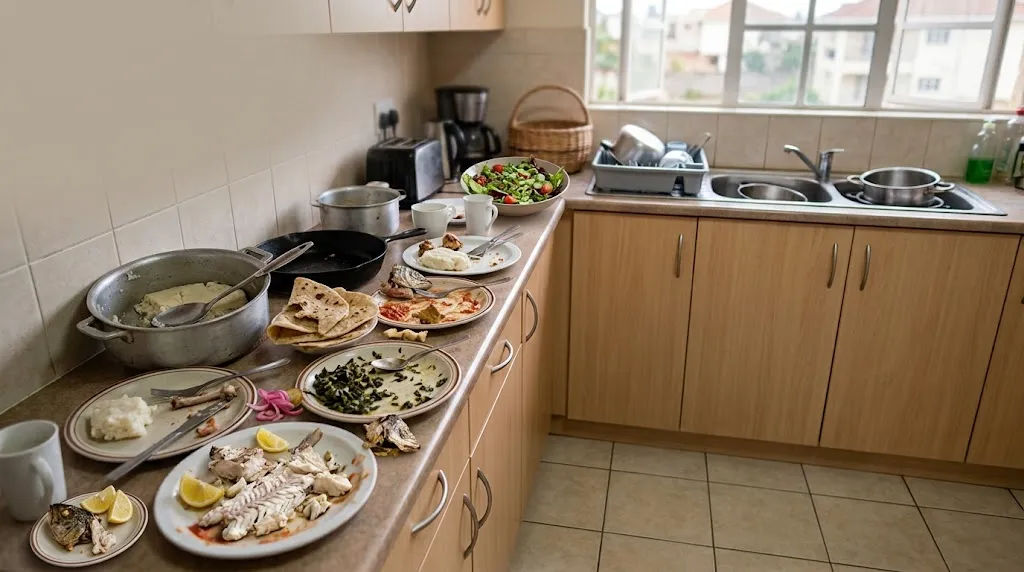
Before sharing leftovers, check the ingredients. Onion, garlic, rich sauces and other seasonings can make an otherwise safe food unsuitable for your dog. Macadamia Nuts
Macadamia nuts may not be an everyday Kenyan kitchen ingredient, but they can appear in imported snacks, biscuits, chocolates and mixed nuts.
Dogs are the only domestic species in which this particular poisoning has been reported. After eating macadamia nuts, a dog may develop weakness, vomiting, poor coordination, shaking and an abnormally high body temperature. Signs commonly develop within about 12 hours.
Xylitol — Especially in Sugar-Free Foods
This one requires extra label-checking. Xylitol is a sugar alcohol used as a sweetener in some sugar-free products.
It can occur in sugar-free chewing gum, some sweets, some baked products, some peanut or nut butters, certain medicines and supplements, and some oral-care products.
In dogs, xylitol can cause a dangerous and sometimes rapid fall in blood sugar, called hypoglycaemia. It can also cause serious liver injury.
Alcohol
Beer, wine, spirits and other alcoholic drinks should never be offered to dogs. Alcohol is absorbed into the bloodstream and affects the brain and nervous system — a dog's smaller body size can make the effects particularly concerning.
Alcohol can be present in more places than an obvious glass of beer or spirits, including some foods and products prepared using alcohol. The safest amount for your dog is none.
Coffee and Other Caffeinated Foods and Drinks
Coffee is not a suitable dog treat. Caffeine is a stimulant that can affect the heart and nervous system — it's also one of the substances responsible for chocolate's toxicity.
Keep dogs away from coffee, coffee grounds, tea, energy drinks, caffeinated tablets or supplements, and products containing significant amounts of caffeine. A dog that gets into a rubbish bin containing used coffee grounds can also be exposed to a concentrated source of caffeine.
Raw Yeast Dough
Making bread at home? Keep the uncooked dough away from your dog. Raw yeast dough can continue to expand inside the stomach, and yeast fermentation can also produce alcohol.
This combination can cause serious stomach problems and alcohol poisoning.
Very Fatty Foods and Greasy Leftovers
This category is slightly different. A fatty food isn't necessarily a classic poison in the same way as xylitol or chocolate. However, very fatty meals can cause serious digestive problems in some dogs and may contribute to pancreatitis — inflammation of the pancreas, the organ that helps with digestion and blood-sugar regulation.
Deep-fried foods, fatty meat trimmings, greasy sauces and rich leftovers are therefore poor choices for dogs. That familiar habit of scraping the remains of a rich family meal into the dog's bowl can end up costing much more than simply disposing of the leftovers.
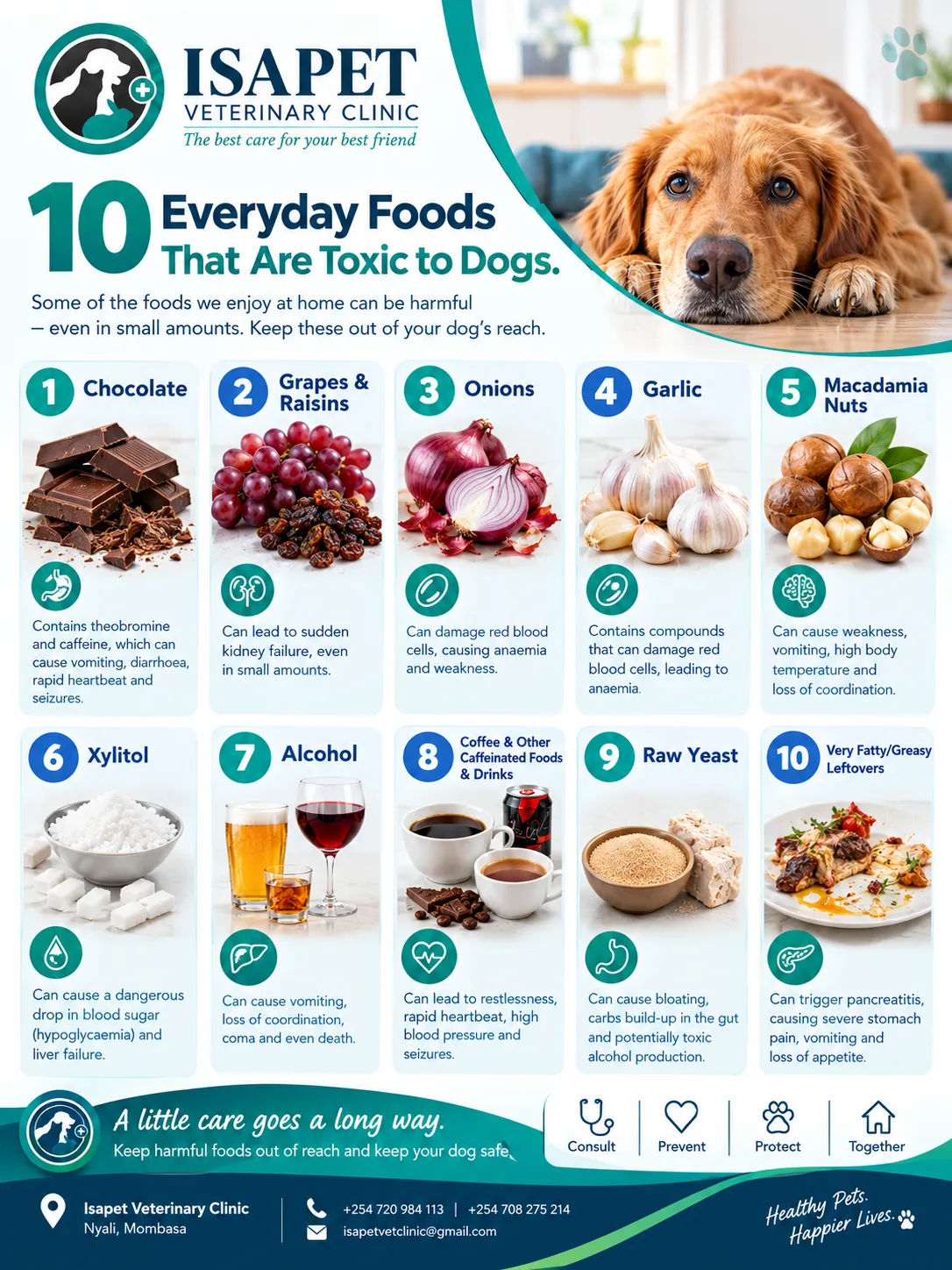
Save this list and share it with everyone in your household. Preventing accidental poisoning starts with knowing what is unsafe.
Save this list and share it with everyone in your household. Preventing accidental poisoning starts with knowing what is unsafe.
What If Your Dog Eats Something Toxic?
Do not wait for symptoms before asking for veterinary advice. The danger varies according to the food, concentration, amount eaten, your dog's size and individual health. A dog may initially appear completely normal even when a toxic substance has already been absorbed.
If you know your dog has eaten a potentially toxic food:
- Remove the remaining food so the dog cannot eat more.
- Keep the packaging or ingredient list if available.
- Note what was eaten, approximately how much and when.
- Call your vet immediately — contact Isapet Veterinary Clinic or your nearest emergency vet for prompt advice.
- Do not give home remedies or attempt to make your dog vomit unless a veterinarian specifically directs you to do so. Different toxins require different approaches.
A Simple Rule for Every Kenyan Kitchen
When your dog looks at you hopefully while you're eating, remember: safe for people does not automatically mean safe for dogs.
Before sharing food, ask:
- Is this food known to be safe for dogs?
- Does it contain onion or garlic?
- Could it contain xylitol?
- Is it chocolate or caffeinated?
- Is it very fatty or heavily seasoned?
- Am I giving a treat, or simply feeding my leftovers?
When in doubt, keep it out of the bowl.
Your dog doesn't need to share everything you eat to feel included. Sometimes the kindest thing you can share is a safe treat, a little attention and your company — without the food.
Written by the Isapet Veterinary Clinic team. Isapet Veterinary Clinic, Nyali, Mombasa.