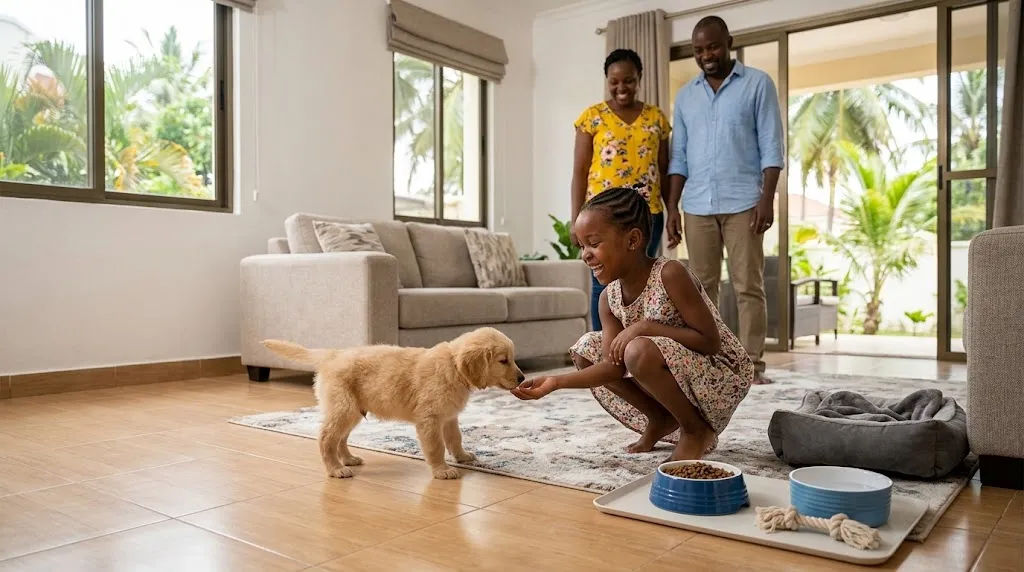
Bringing the Pet Home Without a Plan
A pet needs more than food and a name. Before bringing a pet home, think about where it will sleep, where it will eat, how it will exercise, where it will toilet, and who will care for it when you're away.
You should also budget for:
- Food and water
- Vaccinations
- Parasite prevention
- Veterinary consultations
- Grooming where necessary
- Identification
- Emergency care
- Boarding or pet care when travelling
A pet is a long-term commitment, so planning before the first day can prevent many problems later. It's worth estimating ongoing healthcare costs before taking on a pet.
Waiting Until the Pet Is Sick Before Seeing a Veterinarian
One of the biggest mistakes is thinking, "We'll take him to the vet when something is wrong."
A first veterinary visit should happen early. For a new puppy or kitten, the veterinarian can assess general health, discuss nutrition, establish a vaccination plan, check for parasites and advise you about preventive care.
Regular wellness visits are useful too — problems can sometimes be identified before they become obvious at home.
Assuming Vaccinations Are Optional
A puppy or kitten can look perfectly healthy while still being vulnerable to serious infectious diseases. Vaccination works by preparing the immune system — the body's natural defence system — to recognise and fight particular infections.
Dogs may require protection against diseases such as rabies, parvovirus and distemper. Cats have their own vaccination needs, including protection against important feline diseases. The exact programme should be determined by your veterinarian according to age, health, lifestyle and local disease risks.
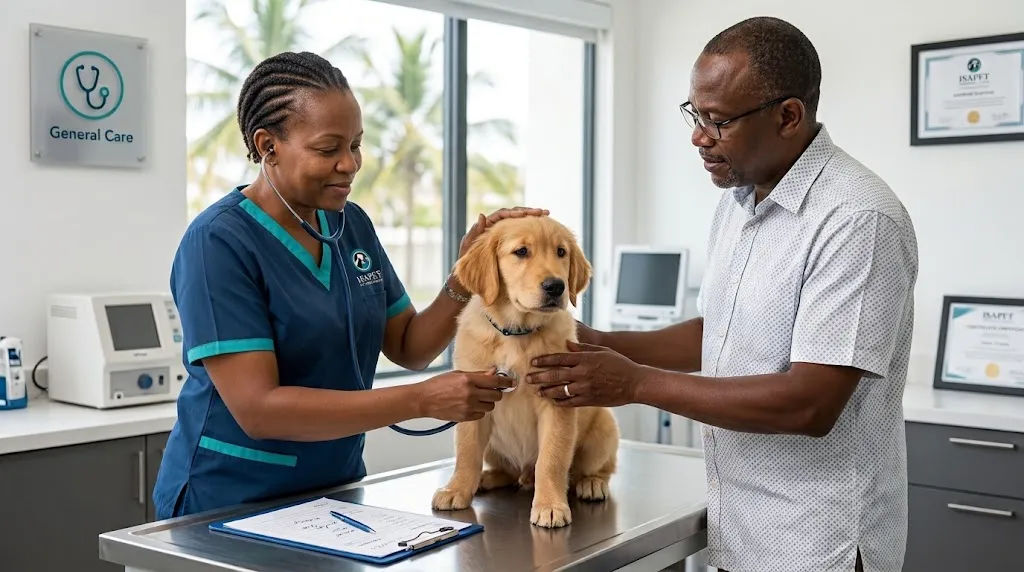
A first veterinary visit helps establish the foundations for your pet's lifelong health. Forgetting About Worms, Fleas and Ticks
You can't always see parasites. They include intestinal worms, fleas and ticks — organisms that live on or inside another animal and obtain nutrients from it.
Puppies and kittens are particularly vulnerable to some intestinal parasites. Some parasites can also affect you, making prevention important for the whole household.
Your veterinarian can recommend an appropriate prevention programme based on your pet's age, lifestyle and environment. And don't assume an indoor pet has zero risk — some parasites can find their way indoors on people, other animals or objects.
Feeding "Whatever We Eat"
A puppy watching you eat is very difficult to resist. Those eyes can make even the strongest owner reconsider the entire dinner plate. But human food shouldn't automatically become pet food.
Dogs and cats have different nutritional requirements from people. A complete and balanced diet is formulated to provide the nutrients an animal needs in appropriate amounts.
Small amounts of suitable treats may be fine, but regular table scraps can contribute to poor nutrition or excessive weight — and some human foods are dangerous. When in doubt, ask before sharing.
Overfeeding Because "The Pet Is Still Growing"
Puppies and kittens grow quickly, but that doesn't mean more food is always better. Overfeeding can encourage excessive weight gain and may interfere with healthy development.
Follow the feeding guidance for your pet's age, size and type of food. Measure portions rather than repeatedly filling the bowl whenever it looks empty. Your veterinarian can help you establish a healthy weight range and adjust feeding as your pet grows.
And remember: treats count too. The World Small Animal Veterinary Association recommends that treats make up no more than 10 percent of a dog's daily calorie intake.
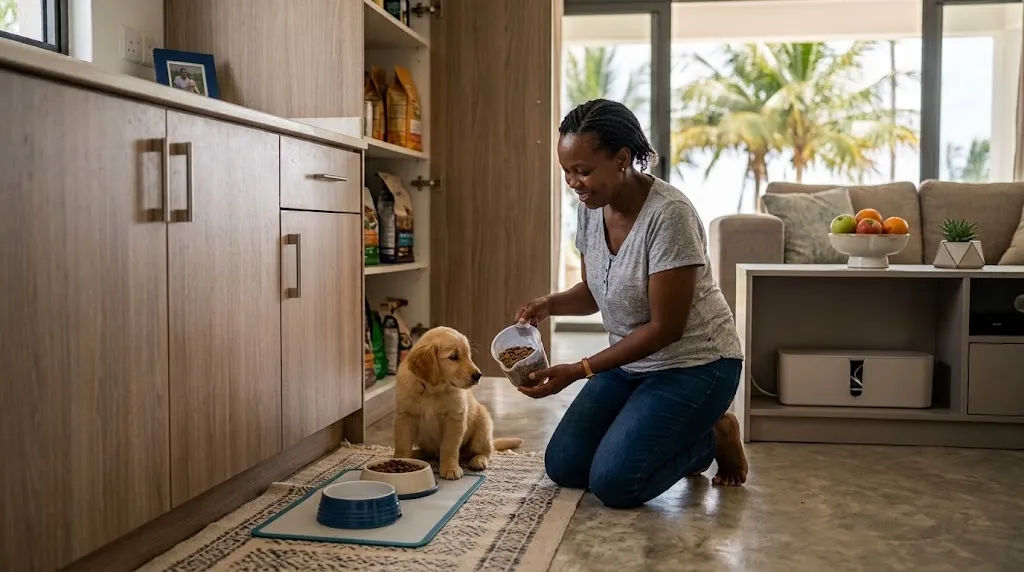
Good nutrition is about more than filling the bowl. The right food and the right amount both matter. Treating the Pet Like a Small Human
Your new puppy may sleep on the sofa, follow you around the house and eventually become your best companion. But it's still a dog. A kitten is affectionate and playful, but it's still a cat. They have different ways of communicating, learning and responding to their environment.
Learn to recognise normal behaviour for your pet's species and age. For puppies, early socialisation — calmly introducing them to appropriate people, places, sounds and experiences — can help build confidence. These experiences should be controlled and positive, rather than overwhelming.
For kittens, provide appropriate opportunities for play, scratching, climbing, resting and exploration.
Using Punishment Instead of Teaching
A puppy having an accident on the floor isn't being "stubborn." A kitten scratching furniture isn't necessarily being "naughty." They may simply not understand what you expect.
Good training teaches the behaviour you want and rewards it consistently. Positive reinforcement means rewarding a behaviour you want to see again — the reward might be a small treat, praise, play or another thing your pet enjoys.
Punishment can create fear and confusion without teaching the animal what it should do instead. Start early, keep training sessions short and be consistent.
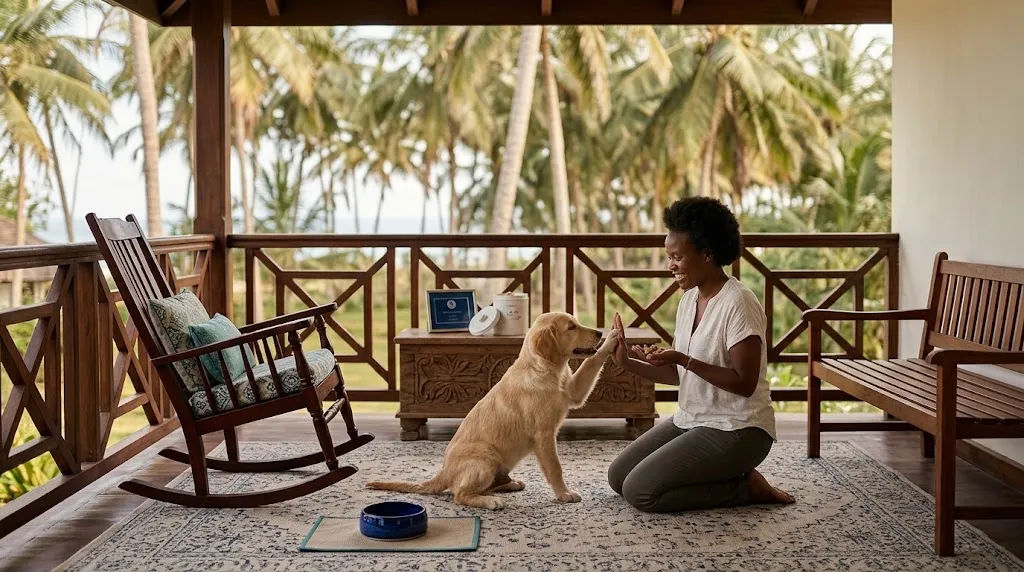
Patience and positive reinforcement help pets understand what you want them to do. Forgetting to Pet-Proof the House
Your home may be perfectly safe for you but full of interesting hazards for a curious puppy or kitten. Before your new pet arrives:
- Secure medicines and household chemicals
- Keep electrical cables out of reach
- Store food securely
- Keep toxic plants away from pets
- Secure rubbish bins
- Keep small objects that could be swallowed out of reach
- Check gates, balconies and other possible escape routes
- Give cats a safe litter-box area
- Provide dogs with a secure place to rest
Kittens are particularly curious climbers, so look at your home from their level rather than only from yours.
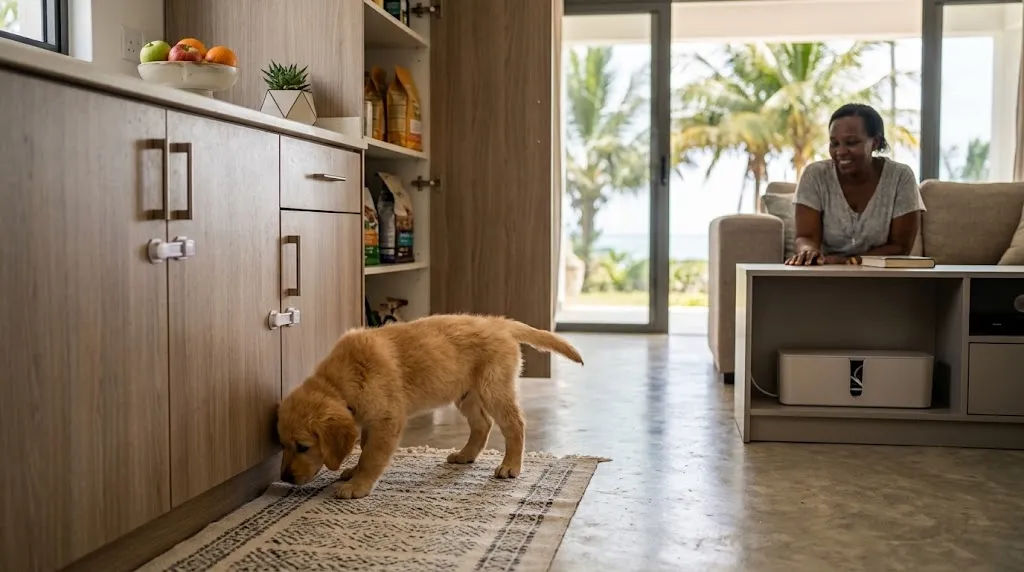
Look at your home from your pet's point of view. Curious animals can find hazards we barely notice. Forgetting That the Pet Will Grow and Change
This tiny puppy won't stay tiny. That playful kitten will become an adult cat. Their nutritional, behavioural and healthcare needs will change as they move through different stages of life — and your responsibility changes too. A good owner keeps learning.
Review your pet's diet as it grows. Keep vaccinations and parasite prevention up to date. Watch changes in weight, appetite, behaviour, toilet habits and activity. Continue veterinary check-ups even when your pet appears healthy.
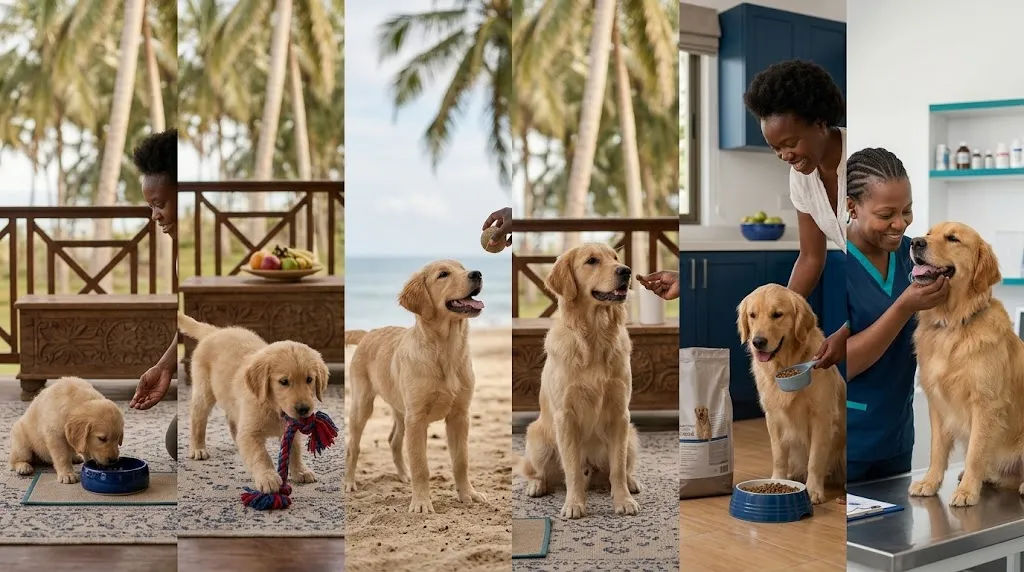
Your pet's needs change as it grows. Good ownership means learning alongside them.
Your First Pet Doesn't Have to Be Perfect
Nobody becomes an experienced pet owner overnight. You'll probably make a few mistakes. What matters is being willing to learn, ask questions and make adjustments.
The simplest approach is to remember five things:
- Feed appropriately.
- Prevent disease.
- Provide a safe home.
- Teach with patience.
- Ask your veterinarian when you're unsure.
Written by the Isapet Veterinary Clinic team. Isapet Veterinary Clinic, Nyali, Mombasa.